
Bringing Peer Support to Life
By: Tracy Severson
In a previous post, we talked about the importance of peer support and why it needs to become a normal part of dispatch center culture. It can’t just live as an idea—it needs structure, support, and clear expectations to actually work. The good news is, building a strong program doesn’t have to be complicated, and it can be done in centers of any size.
The first step is identifying the need and getting buy-in from leadership. The reality is, most administrators already understand that this job comes with stress and mental health challenges. What they may not fully understand is what a peer support program actually looks like in practice.
Sharing research, examples from other centers, or simply walking them through what the program will look like step-by-step helps bridge that gap. It also helps to connect it back to things leadership cares about—morale, retention, and reducing burnout.
Once you have that support, the next step is putting some structure behind it. In most centers, that means creating a written policy or standard operating procedure. This doesn’t have to be built from scratch—there are plenty of examples out there that can be adapted to fit your center. This document should outline expectations, confidentiality, and how the program will function.
Then comes one of the most important pieces—choosing your peer supporters.
Not everyone who volunteers is the right fit, and that’s okay. This role takes more than just signing up. The best peer supporters are usually the ones people already trust—the ones coworkers naturally go to after a tough call. They’re good listeners. They respect confidentiality. They’re approachable. And they’re willing to step into uncomfortable conversations when it matters.
It’s also important to build a team that reflects your center. Different shifts, personalities, and experience levels all matter. People are more likely to reach out when they can connect with someone who understands their perspective.
Once your team is in place, training becomes the next critical step.
Peer supporters need more than good intentions—they need tools. Training should cover things like recognizing stress and trauma, setting boundaries, active listening, and knowing when to refer someone to additional resources.
This is also where confidentiality is reinforced. Having clear expectations—and signed agreements—helps build trust not just within the team, but across the entire center.
And then comes the part where the program starts to come to life. Give it a name. Create a logo. Put information up around the center. Talk about it. Make sure people know who the peer supporters are and how to reach them. Because if people don’t know it exists, they won’t use it.
Peer support also shouldn’t only show up after the hard calls. Some of the most impactful moments come from simple, proactive check-ins. A quick conversation. A small reminder that someone is paying attention. We all work a lot of hours together and more than likely already have a feeling when someone may be struggling with something.
As the program grows, it’s important to keep putting energy back into it. Ask for feedback. Stay open to adjusting things. What works today might need to evolve later—and that’s a good thing.
If your center already has a program that’s struggling, don’t assume it’s broken. Go back to the basics. Look at what’s missing, gather feedback, and make small changes. Sometimes that’s all it takes to get things moving again.
The goal is for peer support to become part of how your center operates every day. Something that feels normal. Something people trust. Something people use without hesitation.
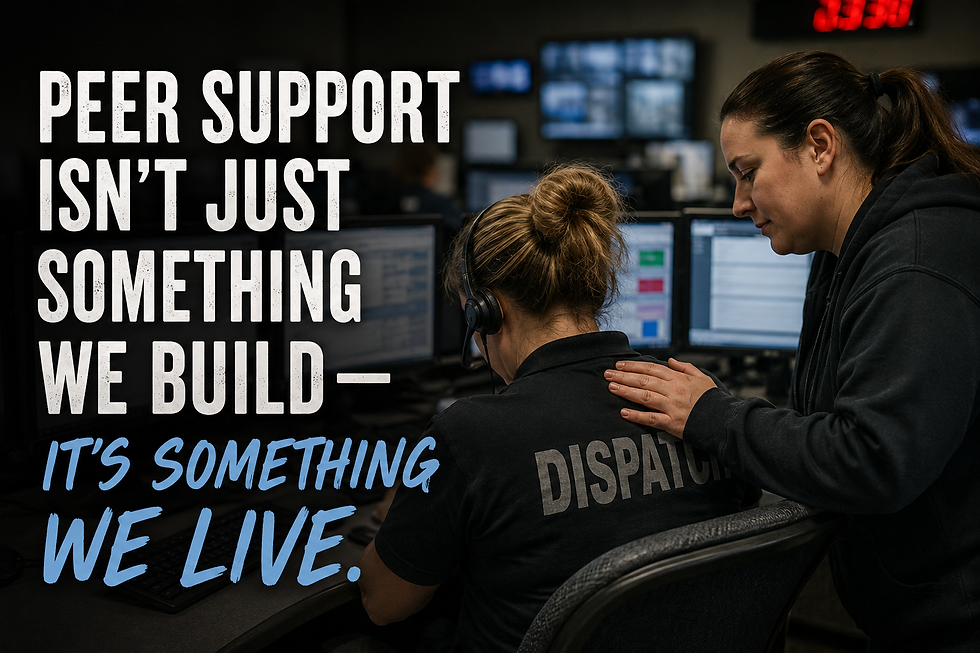
Because at the end of the day, peer support isn’t just something we build - it’s something we live. When it becomes part of the culture, dispatchers don’t have to carry the weight of the job alone anymore.

Hi, I’m Tracy and work for a large consolidated center outside of Chicago. After really just kind of falling into this career during a mid-life change, it’s been nearly 10 years and I can’t imagine doing anything else. We all know this job changes you; for better and for worse. Since I’ve always been an over achiever, I am also a Certified Training Officer (CTO), Union Vice President, very involved in our Public Education team and most recently chosen for our SWAT dispatch team. Having always been passionate about mental health, when the discussion of peer support came up, I wanted to take the lead and I have learned so much. I truly believe that we still have a long way to go to improve how mental health and wellness is handled in the dispatch environment.
Enjoy this blog? Please share it and leave a comment below!
Do you have a story you want to tell? Interested in being a guest blogger? Contact us here and let us know. We'd love to feature you!

Comments